Updated October 22, 2026 · Written by the family who measures and installs them
Quick answer
If the goal is to cut heat on a west or south wall, a solar screen outside the glass does the most, turning away roughly 70–90% of the sun's heat before it reaches the window. If the goal is glare, UV and keeping your view from inside, a solar shade does it better. Many Las Vegas homes use screens on the hot sides and shades on the windows people look out of.
Outside the glass or inside it
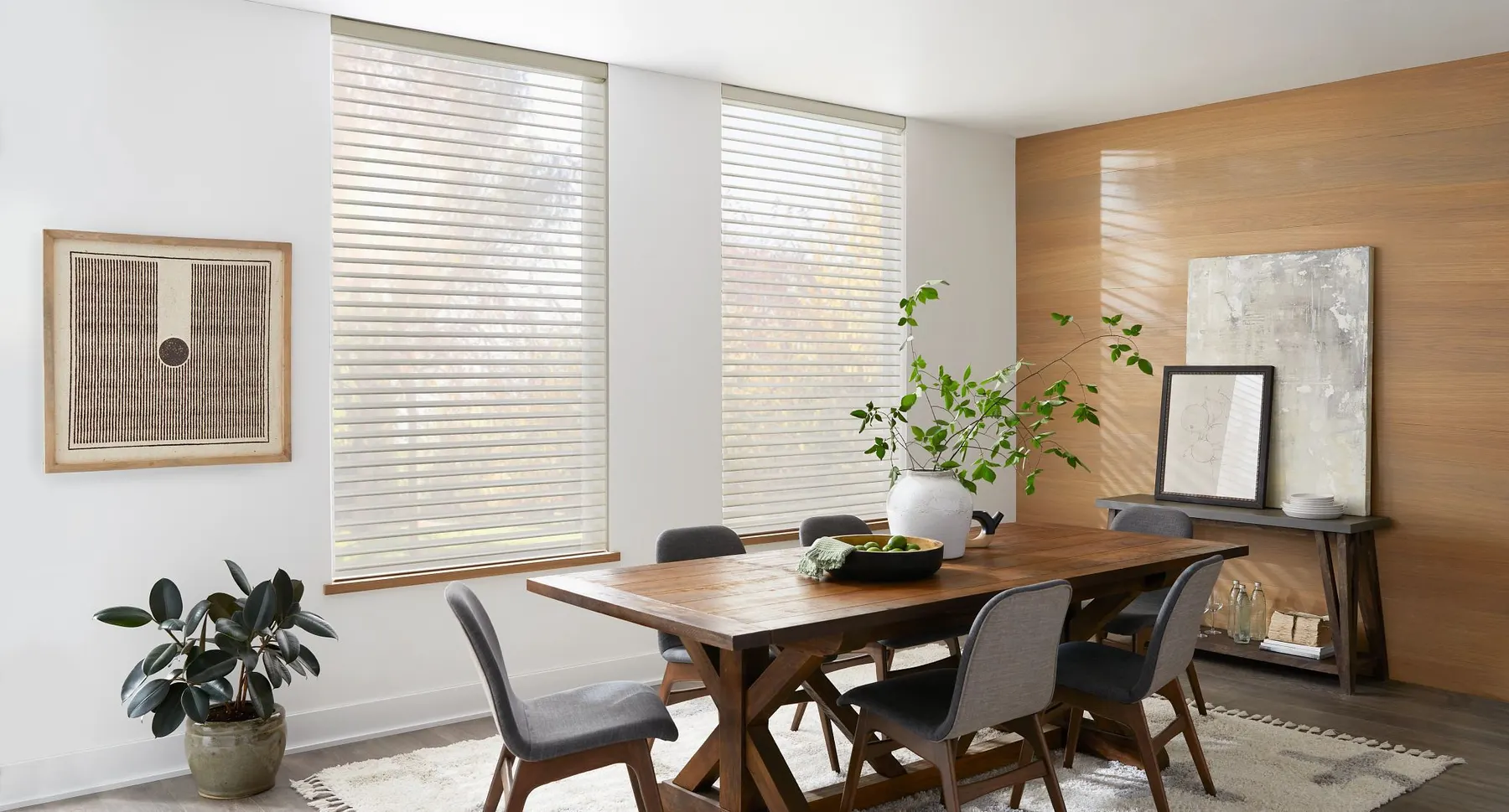
The names sound alike, and they are both made of a woven screen fabric, but they sit on opposite sides of the window. A solar screen is a fixed exterior screen mounted over the outside of the window. A solar shade is an interior roller shade made from screen fabric, which you raise and lower like any other shade.
That one difference decides almost everything else: how much heat each one stops, how the view looks, and whether your HOA has a say.
Heat: stop it before it reaches the glass
The sun's heat is easiest to deal with before it gets through the window. A solar screen catches it outside, rejecting roughly 70–90% of the solar heat depending on the mesh, which is why it is the most practical way to treat an entire west or south side of a house in this valley.
A solar shade still cuts heat and takes real load off your air conditioning on west and south windows, but it works from inside, after the sun has come through the glass. For a room that is simply too hot every afternoon, the screen usually does more.
Glare, view and UV
This is where the solar shade wins. It blocks up to 99% of UV, which is what quietly bleaches hardwood, rugs and leather, and it cuts the glare that makes a television or a monitor unusable in the afternoon, while you still see out.
The number that matters is the openness factor, from 1% to 14%. A tight 3% screen turns away more heat and UV with a softer view; a 10% screen keeps a crisp view and lets more light through. We choose it window by window, because the right answer depends on which way the window faces and what is outside it.
Looks, the street and your HOA
A solar screen darkens the view a little from inside and can be seen from the street, so we put them on the sides of the house that take the beating rather than the front. Because they are on the outside, we check your HOA's guidelines with you before ordering.
A solar shade disappears into a slim cassette when it is up, and when it is down it looks like any other interior shade.
When we use both
On a hard west wall, the two work together: screens outside to stop the heat, and inside, a shade for the windows where you want control of the light. For west-facing bedrooms we often go further and put a solar screen fabric and a blackout on one dual roller, so the room has a view by day and real darkness at night.
At your free consultation we bring both, hold them up to your own windows, and tell you honestly which ones need which.